Key Takeaways:
- Retail Management Systems connect sales, distribution, and loyalty programs in one platform.
- Sales Force Automation (SFA) improves field sales tracking and secondary sales visibility.
- Integrated retail systems help businesses manage distributors, retailers, and promotions more effectively.
Running a retail business today is challenging. Companies sell through distributors, retailers, and multiple channel partners. They must track sales activity, manage inventory, and keep partners engaged.
When these activities happen in different systems, leaders lose visibility. Sales reports arrive late. Furthermore, distributor performance becomes difficult to measure. Loyalty programs fail to show clear results.
Thus, many businesses adopt a Retail Management System supported by Sales Force Automation (SFA) tools.
What Is a Retail Management System?
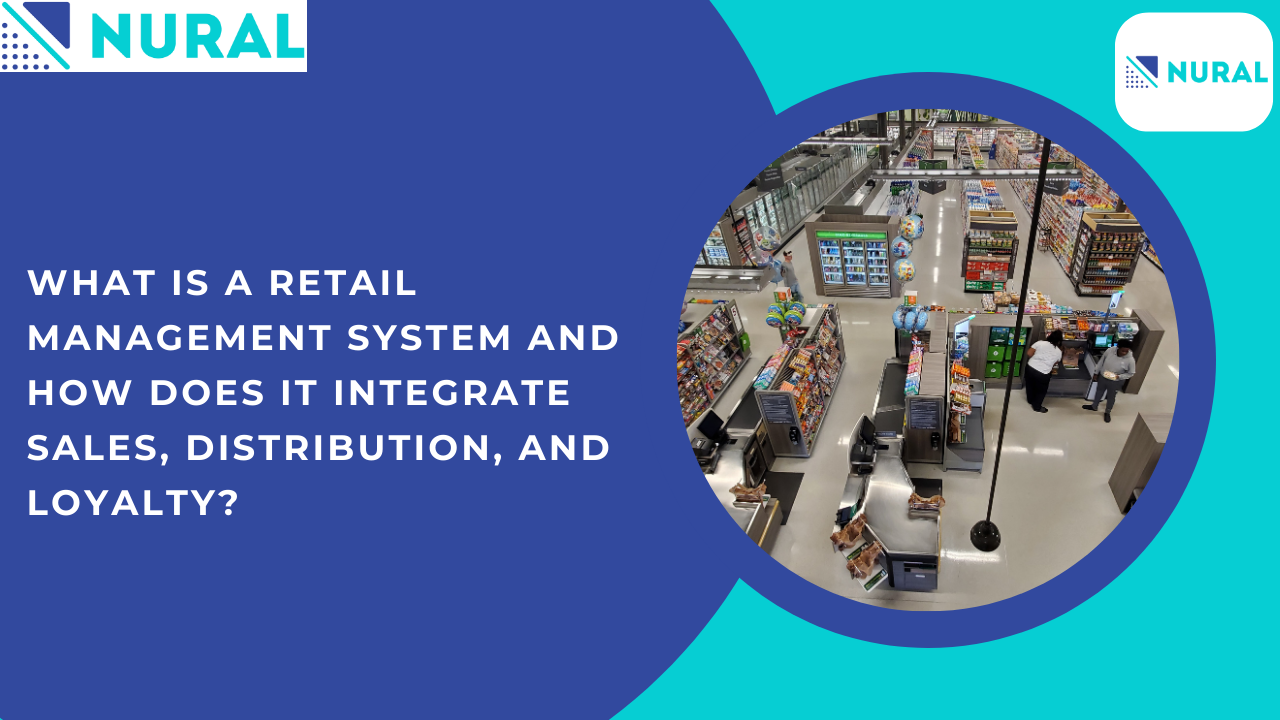
A Retail Management System helps businesses manage retail operations, distributor networks, and sales activity from one platform.
It connects essential functions such as distribution management, field sales tracking, and sales analytics. This gives leadership a clear view of the entire sales and distribution management process.
For example, a biscuit brand sends its products to a distributor. The distributor delivers the products to nearby retail shops. Customers then purchase the biscuits from those shops.
A retail management system helps businesses monitor this entire process more effectively.
Why Businesses Need an Integrated Retail System
Many companies still manage retail operations using spreadsheets or disconnected tools. This creates gaps in distribution management.
Sales leaders struggle to track secondary sales, which shows how much product retailers actually sell. Marketing teams cannot easily measure the impact of promotional schemes or in-store promotion activities.
These challenges increase as markets grow. In such a large FMCG distribution network, companies need systems that provide accurate and timely data.
How Retail Management Systems Connect Sales, Distribution, and Loyalty
A modern sales management application connects three critical areas.
Sales Management
A field sales app helps sales representatives capture orders during store visits using an order booking app.
Managers use a sales force tracker to monitor field activity and territory coverage. Tools such as route planning software support effective sales territory management.
Distribution Visibility
Retail systems also support distributor and consumer management. Businesses can monitor distributor performance and review secondary sales across regions. This improves coordination with every distribution partner in the network.
Loyalty and Promotions
Retail businesses depend on strong partner engagement. A loyalty management system helps companies reward distributors and retailers for sales performance and in store promotion activities.
Companies can also monitor trade promotion management programs and track visual merchandising techniques in retail outlets.
Final Thoughts
Retail growth depends on how well companies coordinate with distributors and retailers. When information moves slowly, decisions become difficult.
A modern retail system connects sales activity, distributor performance, and loyalty programs in one place. Leaders gain a clearer view of what is happening in the market.
Nural SFA helps businesses manage field sales, monitor distributor activity, and improve retail execution. Schedule a demo for Nural SFA today!
We’d Love To Hear From You!
Drive Business Growth with Nuraltech
Empower your sales, distribution & analytics with data-driven SaaS solutions.
Schedule a Demo